|
29
December 2022/ 08:32 LT
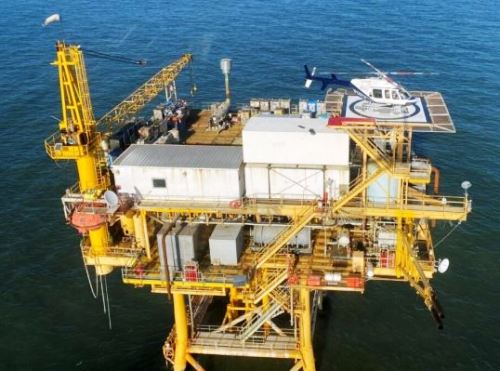
West Delta 106 (WD106) offshore platform,
Gulf of Mexico, LA - United States of America
Final Report
On December 29, 2022, about 08:32 central
standard time, a Bell 407 helicopter, N595RL, was substantially damaged
during takeoff from an offshore platform in the Gulf of Mexico. The
pilot and 3 passengers were fatally injured.
One of the missing workers is 36-year-old
David Scarborough of
Lizana, Mississippi.
The helicopter
landed at 08:25 positioned on the helideck facing SE. The 4 passengers
disembarked and 3 returning passengers, employed by Island Operating
Company, who operate WD160 for Walters, boarded shortly after, having
had a handover discussion with the incoming personnel below decks. The
pilot remained in the rotors running helicopter.
The on-demand passenger flight was departing
from an offshore production platform when, upon liftoff, the helicopter
entered an abrupt right roll and crashed into the helideck and then
descended into the water. Recorded parametric data indicated that
shortly after liftoff, about 2 ft above the helideck, the helicopter was
in a 32° right roll with a right roll rate of about 68 degrees per
second when the device stopped recording.
A review of the helicopter’s in-cockpit
video camera revealed that the pilot did not land the helicopter in the
center of the helideck during the landing that preceded the accident
takeoff. Additionally, the pilot did not reposition the helicopter
before the accident takeoff. Based on video evidence, the position of
the helicopter on the helideck resulted in the aft portion of the right
skid to be adjacent to a helideck perimeter light. Examination of the
helideck revealed impact gouges in the helideck surface that matched the
bolt head pattern of the helicopter’s right skid tube. These gouges
likely were created when the helicopter was in a steep right bank angle.
The location of the impact gouges in the helideck surface further
supports that the aft portion of the right skid tube was in contact with
the helideck perimeter light at takeoff. The perimeter light housing,
whose attachment hardware to the helideck was not frangible, was found
significantly deformed. Based on the physical and video evidence, the
helideck perimeter light became the pivot point for a dynamic rollover
to occur during takeoff.
 The helideck perimeter lights were 2 inches
higher than the construction standard of 6 inches. However, because the
helicopter’s right skid was already in contact with the perimeter light
before the takeoff, the out-of-compliance height of the perimeter light,
by itself, did not contribute to dynamic rollover. The helideck perimeter lights were 2 inches
higher than the construction standard of 6 inches. However, because the
helicopter’s right skid was already in contact with the perimeter light
before the takeoff, the out-of-compliance height of the perimeter light,
by itself, did not contribute to dynamic rollover.
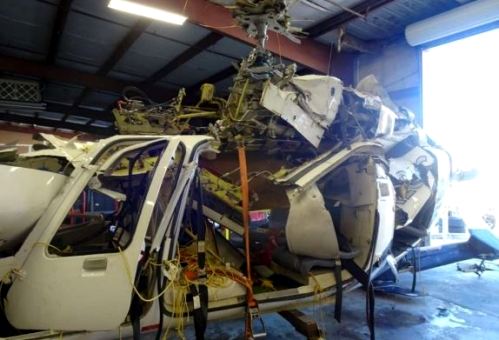
Examination of the helicopter wreckage found
no evidence of preimpact failure of the airframe, the main and tail
rotor systems, or the engine. The main rotor blades and hub exhibited
signatures of powered impact damage consistent with engine power
delivery to the rotor system when the blades impacted the helideck.
Additionally, the recovered engine control unit data confirmed that the
engine was functioning normally up until the main rotor blades impacted
the helideck. Examination of the flight control system found no evidence
of preimpact fractures, disconnections, or restrictions. The lateral
hydraulic servo actuator, which controls the helicopter in the roll
axis, exhibited normal functionality during bench testing.
A review of the pilot’s previous takeoffs
revealed that he typically did not follow company policy to bring the
helicopter into a 3-5 ft hover check before continuing with the takeoff.
The pilot’s improper takeoff technique (without a brief 3-5 ft hover
check) would have decreased his ability to identify and react to any
anomalies during the takeoff, including the onset of a dynamic rollover.
All three requirements for a dynamic
rollover (thrust exceeding helicopter weight, a pivot point other than
the helicopter’s center of gravity, and a rolling moment) were present
during the accident takeoff. Based on the video evidence, the pilot was
likely unaware the helicopter’s right skid was in contact with the
helideck perimeter light before takeoff.
Toxicological testing of pilot’s samples
detected low levels of ethanol in blood and vitreous fluid, high ethanol
levels in liver tissue, but no ethanol in urine. This ethanol pattern is
not consistent with consumption and is likely from postmortem
production, as the levels vary significantly amongst specimens and there
was no ethanol detected in the urine. Therefore, the detected ethanol
did not contribute to the accident.
 The Pilot The Pilot
The NTSB final
report reveals the pilot was hired by RLC on 12 September 2022, just 3.5
months before the accident. His resume reported the following
experience, including working for 5 onshore operators (the S-60 time
should be S-70/H-60):
On 28 September 2022, the pilot completed
RLC’s initial ground and flight training (which included 16.8 flying
hours, 7 offshore), and became a pilot-in-command (PIC) in the Bell 407
helicopter. RLC evaluated the pilot as satisfactory for the ‘Dynamic
Rollover (Oral)’ and ‘Pinnacles or Platform’ requirements.
The pilot’s total flight experience in
helicopters, including the 155.8 flight hours flown with RLC, was
1,667.8 hours, of which 1,343.8 hours were flown as PIC at the time of
the accident. The pilot had operated to and from WD106 a total of 23
times (GOM pilots are frequently assigned to contracts with specific
customers serving a small number of installations).
The pilot was on a 14 day on, 14 day off
roster. He had been in Brazil during his most recent time off and
travelled back on the day before the accident. That would involve a 9:20
hour international flight, a 1:50 hour domestic flight, plus a drive of
c 2:40 hours. The NTSB did not determine their exact schedule. Based on
current flight options this journey either involved leaving late on 27th
with an overnight international flight and arriving early afternoon the
day before the accident or worse, arriving after midnight on the day of
the accident.
Probable Cause
The National Transportation Safety Board determines the probable
cause(s) of this accident to be:
The pilot’s failure to ensure the helicopter was clear of obstacles
before takeoff from the helideck, which resulted in the helicopter’s
right landing skid pivoting about a helideck perimeter light during
takeoff and a dynamic rollover.
Additionally, the pilot’s improper takeoff
technique likely contributed to the development of dynamic rollover.
|


