|
15.01.2023/
10:57 LT
2 km WNW of Pokhara International Airport (VNPR) - Nepal
On 15 January 2023, an ATR72-212A version 500 (Registration:
9N-ANC)
operated by Yeti Airlines was operating a scheduled flight from
Tribhuvan International Airport to Pokhara International Airport. This
was the flight crew's third sector of the day and they had been
operating shuttle flights between Kathmandu and Pokhara.
There were 68 passengers and 4 crew on-board the aircraft. On the final
approach to Pokhara International Airport's runway 12, the aircraft
sustained a loss of control in flight and impacted with the ground
between the old Pokhara Domestic and the new Pokhara International
Airport.
All 72 persons on board were fatally injured.
Mistaken
cutting of power caused Nepal plane crash that killed 72 - Final report
List of passengers:
1 -
2 -
3
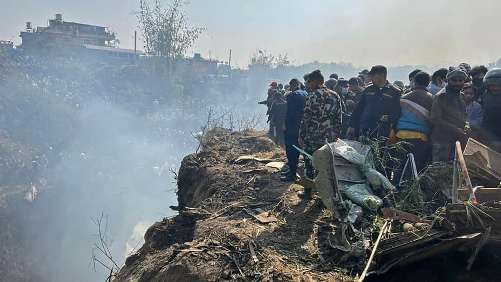 On 15 January 2023, an ATR 72-212A version 500 was operating scheduled
flights between Kathmandu (VNKT) and Pokhara International Airport
(VNPR). The same flight crew operated two sectors between VNKT to VNPR
and VNPR to VNKT earlier in the morning. For first sector, the aircraft
landed on runway 30 of VNPR and thereafter departed from VNPR using
runway 12. The accident occurred during a visual approach for runway 12
at VNPR. This was the third flight by the crew members on that day. As
per the CVR recordings it was understood that the flight was operated by
two Captains, one Captain was in the process of obtaining aerodrome
familiarization for operating into VNPR and the other Captain was an
instructor pilot. The Captain being familiarized, who was occupying the
left-hand seat, was the Pilot Flying (PF) and the instructor pilot,
occupying the right-hand seat, was the Pilot Monitoring (PM). The
take-off, climb, cruise and descent to VNPR was normal. The weather was
compatible with VMC enroute to the destination airport. During the first
contact with VNPR tower, the Air Traffic Controller (ATC) assigned
runway 30 for the aircraft to land. But during the later phases of
flight the flight crew, without mentioning any reason for changing the
allocated runway, requested and received clearance from ATC to change
runway 30 to 12 for landing. On 15 January 2023, an ATR 72-212A version 500 was operating scheduled
flights between Kathmandu (VNKT) and Pokhara International Airport
(VNPR). The same flight crew operated two sectors between VNKT to VNPR
and VNPR to VNKT earlier in the morning. For first sector, the aircraft
landed on runway 30 of VNPR and thereafter departed from VNPR using
runway 12. The accident occurred during a visual approach for runway 12
at VNPR. This was the third flight by the crew members on that day. As
per the CVR recordings it was understood that the flight was operated by
two Captains, one Captain was in the process of obtaining aerodrome
familiarization for operating into VNPR and the other Captain was an
instructor pilot. The Captain being familiarized, who was occupying the
left-hand seat, was the Pilot Flying (PF) and the instructor pilot,
occupying the right-hand seat, was the Pilot Monitoring (PM). The
take-off, climb, cruise and descent to VNPR was normal. The weather was
compatible with VMC enroute to the destination airport. During the first
contact with VNPR tower, the Air Traffic Controller (ATC) assigned
runway 30 for the aircraft to land. But during the later phases of
flight the flight crew, without mentioning any reason for changing the
allocated runway, requested and received clearance from ATC to change
runway 30 to 12 for landing.
At 10:51:36, the aircraft descended from 6,500 feet at fifteen miles
away from VNPR and joined the downwind track for Runway 12 to the north
of the runway. The aircraft was visually identified by ATC during the
approach. At 10:56:12, the pilots extended the flaps to the 15 degrees
position and 46 seconds later they selected the landing gears lever to
the down position.
At 10:56:27, the PF disengaged the Autopilot System (AP) at an altitude
of 721 feet Above Ground Level (AGL). The PF then called for “FLAPS 30”
at 10:56:32, and the PM replied, “Flaps 30 and continue descent. The
flight data recorder (FDR) data did not record any flap surface movement
at that time. Instead, the propeller rotation speed (Np) of both engines
decreased simultaneously to less than 25%1 and the torque (Tq) started
decreasing to 0%, which is consistent with both propellers going into
the feathered condition. The feather condition is not recorded in the
FDR parameters. On the cockpit voice recorder (CVR) area microphone
recording, a single Master Caution chime was recorded at 10:56:36. As
per CVR readout, the flight crew then carried out the “Before Landing
Checklist” without identifying the flaps were
not to the 30º position, before starting the left turn onto the
base leg. During that time, the power lever angle increased from 41% to
44%. At that point, Np of both propellers was recorded as Non-Computed
Data (NCD) in the FDR and the torque (Tq) of both engines was at 0%.
When propellers are in feather, they are not producing thrust. When both
propellers were feathered both engines of 9N-ANC were running in flight
idle condition during the event flight as per design to prevent
overtorque. As per the FDR data, the engine turbo machine were
functioning as expected considering the propeller were feathered. At
10:56:50 when the radio altitude callout for five hundred feet was
annunciated, another “click”sound was heard. The aircraft turned to the
left and reached a maximum bank angle of 30 degrees. The recorded Np and
Tq data remained non-computed, in line with propellers being in feather
condition. The yaw damper was disconnected four seconds later. The PF
consulted the PM on whether to continue the left turn and the PM replied
to continue the turn. Subsequently, the PF asked the PM on whether to
continue descend and the PM responded it was not
necessary and instructed to apply a little power. At 10:56:54, another
click was heard, followed by the flaps moving to the 30 degrees
position.
When ATC gave the clearance for landing at 10:57:07, the crew did not
respond to the tower, the PF mentioned twice that there was no power
coming from the engines. The FDR data shows that at 10:57:11, the power
levers were advanced first to 62 degrees then to the maximum power
position in 2 seconds. It was followed by a “click” sound at 10:57:16.
One second after the “click” sound, the aircraft was at the initiation
of its last left turn at 368 feet AGL, the highpressure turbine speed
(Nh) of both engines increased from 73% to 77%.
It is noted that at 10:57:18, in the very last stage of flight, the PF
handed over control of the aircraft to the PM. At 10:57:20, the PM (who
was previously the PF) repeated again that there was no power from the
engines. At 10:57:24 when the aircraft was at 311 feet AGL, the stick
shaker was activated warning the crew that the aircraft Angle of Attack
(AoA) increased up to the stick shaker threshold.
At 10:57:26, a second sequence of stick shaker warning was activated
when the aircraft banked towards the left abruptly. Three seconds later,
the radio altitude alert for two hundred feet was annunciated, and the
cricket sound and stick shaker ceased. At 10:57:32, sound of impact was
heard in the CVR. The FDR and CVR stopped recording at 10:57:33 and
10:57:35 respectively.
The Pokhara International Airport was opened on January 1, 2023 and is
located to the east-southeast of the old Pokhara Airport.
The most probable cause of the accident is determined
to be the inadvertent movement of both condition levers to the feathered
position in flight, which resulted in feathering of both propellers and
subsequent loss of thrust, leading to an aerodynamic stall and collision
with terrain.
The contributing factors to the accident are:
1 High workload due to operating into a new airport with surrounding
terrain and the crew missing the associated flight deck and engine
indications that both propellers had been feathered.
2 Human factor issues such as high workload and stress that appears to
have resulted in the misidentification and selection of the propellers
to the feathered position.
3 The proximity of terrain requiring a tight circuit to land on runway
12. This tight circuit was not the usual visual circuit pattern and
contributed to the high workload. This tight pattern also meant that the
approach did not meet the stabilized visual approach criteria.
4 Use of visual approach circuit for RWY 12 without any evaluation,
validation and resolution of its threats which were highlighted by the
SRM team of CAAN and advices proposed in flight procedures design report
conducted by the consultant and without the development and approval of
the chart by the operator and regulator respectively.
5 Lack of appropriate technical and skill based training (including
simulator) to the crew and proper classroom briefings (for that flight)
for the safe operation of flight at new airport for visual approach to
runway 12.
6 Non-compliance with SOPs, ineffective CRM and lack of sterile cockpit
discipline.
Here are some of those on board who lost their lives.
Australian Myron Love
Australian authorities have confirmed Sydney teacher Myron Love, 29, was
among those killed.
Friends have paid tribute to avid cyclist and surfer as a "truly kind,
fun, energetic man", with one telling local media he had "never met a
more genuine bloke in my life".
In a statement, his family said Myron had been their rock.
"He has put so much into his short life that most of us couldn't fit
into our lifetime."
A South Korean soldier and his son
The 45-year-old father surnamed Yoo was a sergeant in the South Korean
army. He was on holiday with his 14-year-old son during the son's winter
break from school.
The two left South Korea on 14 January for a hiking trip in the
Himalayas. They had been messaging their families on the day when the
incident happened, but the families didn't hear anything from them after
the flight's scheduled arrival time passed, South Korean media reported.
They told their families that they travelled from India to Nepal that
day. They had planned to visit several places in Nepal, the reports
said.
Sonu Jaiswal, Abhishek Kushwaha, Anil
Rajbhar and Vishal Sharma
Sonu Jaiswal livestreamed from the plane seconds before it crashed
The four men, all thought to be in their 20s or early 30s, were from
Ghazipur in India's Uttar Pradesh state. They were among five Indians on
board.
Locals in Ghazipur said they had gone to Nepal on 13 January to visit
the Pashupatinath temple, a grand shrine on the outskirts of Kathmandu
which is dedicated to the Hindu god Shiva.
The trip was reportedly Jaiswal's idea - a father of three, he wanted to
pray at the temple for another son.
They planned to go paragliding in Pokhara. Jaiswal was livestreaming as
the plane came in to land.
Several villagers remembered the four men as "kind, fun-loving souls".
Co-pilot Anju Khatiwada
Anju Khatiwada was co-piloting Yeti Airlines flight 691. A trailblazer,
Anju was one of just six women employed by the airline as pilots and had
flown close to 6,400 hours.
"She was a full captain at the airline who had done solo flights,"
Sudarshan Bartaula from Yeti Airlines said. "She was a brave woman."
It has emerged that her husband Dipak Pokhrel had also been co-piloting
a Yeti Airlines flight when it crashed in 2006 - and it was his death
that spurred Anju to pursue a career in aviation. Nepal co-pilot's
husband died in 2006 plane crash
Singer Nira Chhantyal
Nira was a singer who often flew with Yeti Airlines. Low-cost air travel
has become an affordable and popular way for Nepal's middle class to
traverse the mountainous nation.
Nira, who had moved to Kathmandu, had been on the flight on her way to
perform at a music festival in Pokhara.
"She was a very talented artist and used to sing folk songs. She would
often sing spontaneously," her friend Bhimsen told the BBC.
"I have no words to describe the loss."
Dancer Ruan Crighton
Ruan Calum Crighton, 34, from Essex in the United Kingdom, was a
professional ballet dancer who had studied and worked in London and
Europe.
Former colleagues remember a "wonderful" man.
Ruan's name and passport number was published by the Civil Aviation
Authority of Nepal shortly after the crash.
It listed his nationality as Irish, but he was later confirmed to have
been travelling on a UK passport. The UK's Foreign, Commonwealth and
Development Office (FCDO) said it was providing consular support.
========================================================================================================
 Четверо
россиян находились на борту самолета, разбившегося в окрестностях города
Покхара в Непале Четверо
россиян находились на борту самолета, разбившегося в окрестностях города
Покхара в Непале
 15.01.2023/
10:57 м. вр. 15.01.2023/
10:57 м. вр.
Непал, Покхара
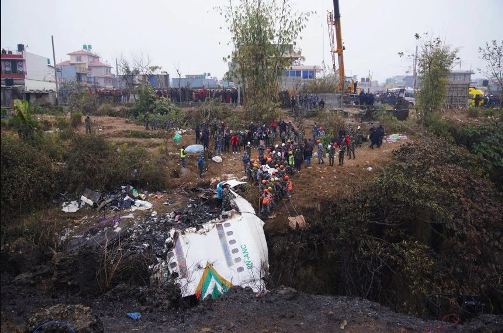
Днем, 15 января, самолет ATR 72 (9N-ANC), принадлежащий
авиакомпании Yeti Airlines, выполнял внутренний рейс
YT691 из Катманду разбился между старым и новым
аэропортами города Покхара. На борту находились 68 пассажиров и экипаж
из четырех человек. Этим рейсом летели четверо россиян (москвичка и трое ростовчан):
Алтунина Виктория, Бандуро Елена, Лугин
Юрий и Лугин Виктор. Это
активные люди, у которых много друзей и знакомых: Виктория -
преподаватель в вузе, Виктор - предприниматель. Узнав о трагедии, люди
были шокированы случившимся.
Все находившиеся на борту 72 человека
погибли.
Наиболее вероятной причиной аварии считается
непреднамеренное перемещение обоих рычагов управления в положение
флюгирования в полете, что привело к флюгированию обоих винтов и
последующей потере тяги, вызвавшей аэродинамическое сваливание и
столкновение с землей.
========================================================================================================
 Самолет
със 72 души на борда се разби в Непал, няма оцелели Самолет
със 72 души на борда се разби в Непал, няма оцелели
 15.01.2023/ 10:57 м. вр. 15.01.2023/ 10:57 м. вр.
Непал, Покхара
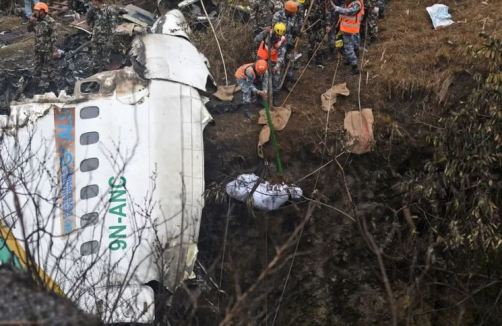
През деня на 15 януари, самолет ATR 72 (9N-ANC), принадлежащ
на
авиокомпанията Yeti Airlines, изпълнявал вътрешен полет
YT691 от Катманду за Покхара и се разбил между старото
и новото летище на града дестинация. На борда са се намирали 68 пасажери и
екипаж
от четири души. Няма оцелели. Това бил третият полет за деня на екипажа.
В пилотската кабина са се намирали двама командири на екипажи, където
Anju Khatiwada (лява седалка) изпълнявала функциите на втори пилот и
наблюдаващ пилот (дясна седалка), който трябвало да я запознае с
особеностите на подхода и кацането на новата полоса 12.
В началото
диспечера им предложил да кацнат на старата полоса 30, но по настояване
на наблюдаващия пилот започнали заход към полоса 12. Това внесло
напрежение в екипажа и заходът изпълняван от Khatiwada бил нестабилен.
Тя изключва автопилота, започва снижение и изисква от колегата си
"задкрилки на 30º", тъй като ръчката за тях се намира
непосредствено до него. Той докладва, че е изпълнено, но всъщност по
невнимание е преместил ръчките за стъпка на витлата до положение на
пълно флюгиране, при което двигателите работят, но не произвеждат тяга.
Khatiwada усилва мощността на двигателите до максимум, но безрезултатно.
Така и не се досещат защо изведнъж губят тягата и на двата двигателя.
След секунди самолетът изпада в аеродинамичен срив и се разбива
в дере.
Най-вероятна причина за катастрофата се счита
непреднамереното преместване на двете ръчки за управление в положение
флюгиране в полет, което довело до флюгиране на двата винта и
последваща загуба на тяга, предизвикало аеродинамическо пропадане и
стълкновение със земята.
Като способстващи фактори се посочват:
Високото работно натоварване на екипажа и стресът да се кацне на новата
полоса без необходимата подготовка за стабилен заход при малка височина
и липса на видимост към ПИК12; пропускът да се дефинира своевременно
причината за загуба на тяга; недостатъъчна натренираност на умения,
включително със симулатор; непроведен предполетен брифинг за предстоящия
полет; неефективно общуване между членовете на екипажа и стерилна
дисциплина в пилотската кабина.
|

