On October 2, 2019, about
09:53 eastern daylight time, a Boeing B-17G, N93012,
was destroyed when it impacted terrain short of runway 6 at Bradley
International Airport (BDL), Windsor Locks, Connecticut. The commercial pilot, airline transport pilot, and
five passengers were fatally injured; the crew chief/flight
engineer and four passengers were seriously injured; and one passenger
and one person on the ground sustained minor injuries. The
airplane was operated by the Collings Foundation as a Title 14 Code of
Federal Regulations (CFR) Part 91 local commercial sightseeing flight. The aircraft was part of The Collings
Foundation's Wings of Freedom Tour. Five historic WWII aircraft were on
display at Bradley Airport and scenic flights were carried out. The B-17
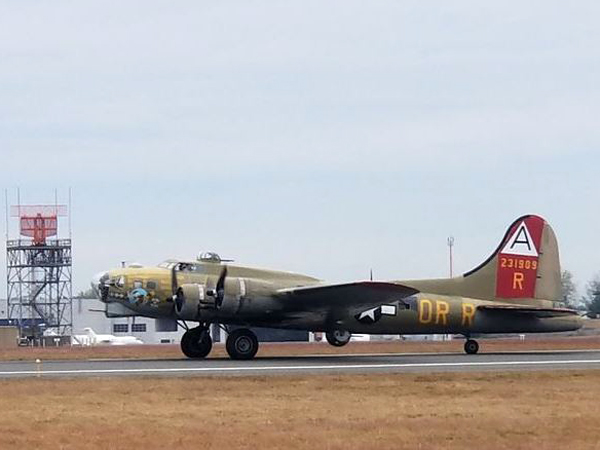
carried a military livery as "42-31909" and named "Nine
O Nine". The local flight had received clearance for
departure from runway 06 at 09:45 hours local time. After takeoff the
aircraft made a right-hand turn. At 09:50 the aircraft contacted the
Bradley Tower controller and reported an engine no.4 problem ("rough
mag") and asked permission to land on runway 06. This was approved. The controller then instructed the pilot to
fly a right downwind leg for runway 6 and confirmed that the flight
needed an immediate landing. He subsequently cancelled the approach of
another airplane and advised the pilot to proceed however necessary to
runway 6. The approach controller instructed the pilot to contact the
tower controller, which he did. The tower controller reported that the wind
was calm and cleared the flight to land on runway 6. The pilot
acknowledged the landing clearance; at that time, the airplane was about
300 ft agl on a midfield right downwind leg for runway 6. The tower
controller asked about the airplane's progress to the runway and the
pilot replied that they were "getting there" and on the right downwind
leg. No further communications were received from the accident airplane.
The airplane struck approach lights about 1000 ft prior to the runway,
then contacted the ground about 500 ft prior to the runway before
reaching runway 6. It then veered right off the runway before colliding
with vehicles and a deicing fluid tank about 1100 ft right of the center
of the runway threshold. The wreckage came to rest upright and the
majority of the cabin, cockpit, and right wing were consumed by
postimpact fire. An investigation of the wreckage showed that
all three propeller blades on the no. 4 engine appeared in the feather
position. The no.3 engine had one propeller blade that was near the
feather position. The other two blades appeared in a position between
low pitch and feather. It was also found that the No. 4 engine’s
left magneto produced a strong spark on the ignition leads for all nine
cylinders, but that the grounding tab contacted the housing, causing the
magneto to short and not function during a postaccident test. The No. 4
engine’s right magneto produced no spark on one of the nine ignition
leads and a weak and intermittent spark on the other eight ignition
leads because of wear to the compensator cam. The shorted-out left
magneto would have caused rough engine operation and a partial loss of
engine power that would have been exacerbated by the weak right magneto,
which is likely what prompted the pilot to shut down the No. 4 engine
and return to the airport. With the No. 4 engine shut down, the pilot
would have had to use a higher power setting for the No. 3 engine to
compensate for the loss of power from the No. 4 engine. Teardown
examination of the No. 3 engine revealed evidence of detonation on four
of the nine cylinders. In addition, the teardown examination revealed
that the spark plugs were worn and had gaps between the electrodes that
were beyond the manufacturer’s specifications. The condition of the
spark plugs likely resulted in detonation and a partial loss of engine
power that further reduced the total thrust available and exacerbated
the thrust asymmetry. The pilot had performed a preflight run-up
check of the magnetos at an engine speed of 1,700 rpm, which was higher
than the 1,600-rpm speed in the Collings Foundation’s run-up checklist;
after the check, the magnetos appeared to perform normally. However, a
B-17 engine ground test checklist included instructions to check the
magnetos at an engine speed between 1,900 and 2,000 rpm. If the pilots
had been required to perform the magneto check at the higher rpm, they
might have detected the detonation on the No. 3 engine and/or the
magneto anomalies on the No. 4 engine.
Probable Cause and Findings The National Transportation Safety Board
determines the probable cause(s) of this accident to be: The pilot’s failure to properly manage the
airplane’s configuration and airspeed after he shut down the No. 4
engine following its partial loss of power during the initial climb.
Contributing to the accident was the pilot/maintenance director’s
inadequate maintenance while the airplane was on tour, which resulted in
the partial loss of power to the Nos. 3 and 4 engines; the Collings
Foundation’s ineffective safety management system (SMS), which failed to
identify and mitigate safety risks; and the Federal Aviation
Administration’s inadequate oversight of the Collings Foundation’s SMS.
02.10.2019/ 09:53
местное время
США/ Коннектикут/ Виндзор-Локс/ аэропорт Брэдли (BDL/KBDL)
Катастрофа Boeing B-17 в Виндзор-Локсе — авиационная катастрофа,
произошедшая 2 октября 2019 года в аэропорту Брэдли, Виндзор-Локс,
Коннектикут (США). Boeing B-17 Flying Fortress, находящийся в частной
собственности Collings Foundation, потерпел крушение. Семь из тринадцати человек, находившихся на борту,
погибли, шестеро получили ранения, а также один человек пострадал
на земле. Самолёт был уничтожен огнём, осталась только часть
одного крыла и хвоста
Самолёт находился в эксплуатации 74 года. Boeing B-17 Flying
Fortress, войсковой серийный номер 44-83575
(variant B-17G-85-DL) с гражданским регистрационным номером N93012.
Самолёт был перекрашен, чтобы представлять собой другой B-17G номером
"42-31909". Самолёт совершал непродолжительные полёты для любителей истории и
авиации.
Авиационное происшествие
Полет "живой истории" был задержан на 40 минут из-за сложности запуска
одного из четырёх двигателей. Пилот выключил запущенные три двигателя и
использовал баллончик с распылителем, чтобы "выдуть влагу" в отказавшем
двигателе.
Самолёт вылетел из аэропорта Брэдли, Виндзор-Локс, Коннектикут, в 09:48
по местному времени местным рейсом.
Инцидент произошел рядом с аэропортом Брэдли. После взлета экипаж
сообщил, что самолет не может набрать высоту. Пилоты попытались посадить
бомбардировщик в аэропорту, но потеряли управление. Самолет разбился при
посадке, врезавшись в склад аэропорта, где хранились средства против
обледенения. Вспыхнул пожар. В результате авиакатастрофы погибли семь
человек. На борту бомбардировщика находились 13 человек, в том числе три
члена экипажа.
Бомбардировач
„Летяща крепост” се разби в САЩ и погуби седмина
02.10.2019/
09:53 м. вр. САЩ/ Кънектикът/ Уиндзор-Локс/ летище Брэдли (BDL/KBDL)
На 2-ри октомври в 09:53 местно време при заход за принудително кацане
след отказ на двигател №4 в полет се разби на летище Брадли (BDL),
Кънектикът, САЩ, бомбардировачът легенда от Втората световна война
известен още като „Летяща крепост” Boeing B-17G с регистрационен номер
N93012. Като собственост на Collings Foundation е използван за кратки
полети за любители на историята и авиацията. За целта самолетът е
пребоядисан в краските и с нанесен бордови номер "42-31909" на популярния
от войната B-17G наричан по онова време „Девет О Девет”, изпълнил 140
бойни мисии в Европа. Самолетът на Collings Foundation, произведен в
далечната 1944 г. се е намирал в експлоатация 74 години.
При подхода за кацане екипажът не успява да се справи с получилата се
асиметрия в тягата на двигателите, особено след загуба на мощност и от
двигател №3.
На около 330 м от началото на полосата самолетът помита част от лампите
на "Подхода", докосва земята на около 160 м преди бетонната писта, свива
надясно и се врязва в хангар с цистерни с противооблединителна течност.
Избухва в пламъци. От намиращите се на борда 13 души, от които 3-ма са
екипаж, загиват седем, в това число и двамата пилоти,
останалите 6 са с
ралични по тежест наранявания. Леки наранявания получава и служител,
намирал се в хангара по време на катастрофата.
Излитането на самолета закъснява от разписанието с 40 минути заради
проблем със запуска на един от двигателите. Наложило се екстрено да
сушат проникналата в него влага. След излитането в 09:48 м. вр. екипажът
установява, че не може да продължи набора на височина, докладва на
диспечера и предприема завръщане на летището с подход за кацане на
полоса №6. Националният транспортен борд по безопасността (NTSB) счита,
че
катастрофата се дължи на несправянето на пилота с конфигурацията на
самолета и въздушната му скорост след изключването на двигател №4 при
частичната му загуба на мощност. За произшествието допринасят още:
• неадекватната поддръжка на самолета от страна на пилота явяващ се и
директор по подръжката. Открити са неизправности в електрическата
система довели до частичната загуба на мощността на двигателите №3 и №4;
• нееефективната система по безопасност на Collings Foundation, която е
пропуснала да индентифицира и минимизира рисковете за безопасността при
експлоатацията на въздухоплавателното средство..
• неадекватният надзор от страна на Федерелната авиационна администрация
(FAA) върху системата по безопасност прилагана в Collings Foundation.


 With the No. 4 engine shut down, the pilot
would have had to use a higher power setting for the No. 3 engine to
compensate for the loss of power from the No. 4 engine. Teardown
examination of the No. 3 engine revealed evidence of detonation on four
of the nine cylinders. In addition, the teardown examination revealed
that the spark plugs were worn and had gaps between the electrodes that
were beyond the manufacturer’s specifications. The condition of the
spark plugs likely resulted in detonation and a partial loss of engine
power that further reduced the total thrust available and exacerbated
the thrust asymmetry.
With the No. 4 engine shut down, the pilot
would have had to use a higher power setting for the No. 3 engine to
compensate for the loss of power from the No. 4 engine. Teardown
examination of the No. 3 engine revealed evidence of detonation on four
of the nine cylinders. In addition, the teardown examination revealed
that the spark plugs were worn and had gaps between the electrodes that
were beyond the manufacturer’s specifications. The condition of the
spark plugs likely resulted in detonation and a partial loss of engine
power that further reduced the total thrust available and exacerbated
the thrust asymmetry.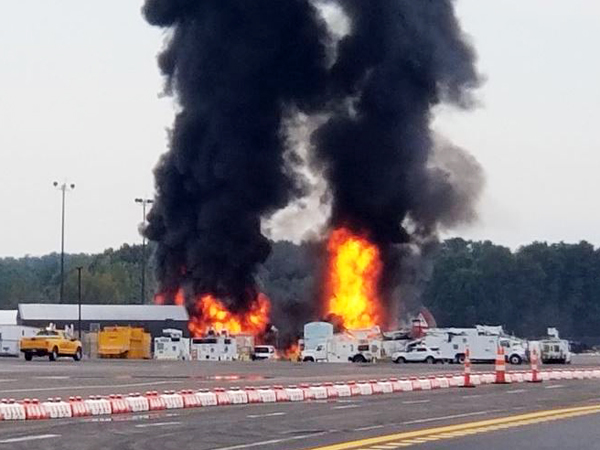 02
02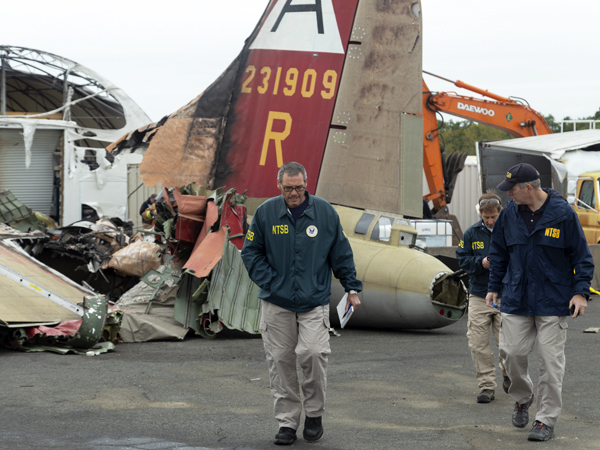 02.10.2019/
09:53 м. вр.
02.10.2019/
09:53 м. вр.